26-27
June 2027
New Hall NO. 3-4, Chennai Trade Centre, Chennai
Visitor Registration
Exhibitor Registration
Exhibition
Exhibition Overview
Exhibitors
Exhibitor Registration
Visitor Registration
Conference
Conference Overview
Agenda
Speakers
Conference Registration
Speaker Registration
Awards
Award Overview
Award Categories
Award Registration
Award Winners 2025
Award Winners 2024
Award Winners 2023
Terms & Conditions
Partner
Sponsor
Sponsor Registration
Media
Gallery
Media
Press Releases
Post Show Report
Previous Shows
2026
2025
2024
2023
2022
Gurugram
Mumbai
Agenda
Powering India’s Transition to Electric Mobility
India EV 2027 Chennai Conference Agenda
Day 1
Day 2
June 26
th
2027
09:20 – 10:20 AM
Registration and Networking
10:20 – 10:30 AM
Inaugural Address
Ashita Marya
CEO & Consulting Editor, Entrepreneur India Media
10:30 – 10:35 AM
Lamp Lighting and Inauguration
10:35 – 10:55 AM
Inaugural Keynote : Writing EV Growth Story: Tamil Nadu Model of Success
Tamil Nadu’s journey: anchored investments, supplier ecosystem and policy continuity.
What other Indian states can realistically replicate by 2030.
Linking manufacturing clusters to domestic demand and export corridors.
Thiru. VS Venkatesan
Joint Director, MSME Department & GM (I/C), Fame TN, Tamil Nadu
10:55 – 11:50 AM
Panel 1: EV Manufacturing for the World: Scale, Challenges and India’s Edge
Balancing affordability with performance and durability for Indian and global markets.
EV platform standardisation and modular architectures for faster scaling.
Managing battery and raw-material supply volatility with diversified sourcing.
Demand forecasting for 2W/3W, PVs and commercial segments in India and abroad.
Structuring global partnerships for technology transfer, co-development and JVs.
Moderator
I.V. Rao
Distinguished Fellow, Transport & Urban Governance, TERI
Speaker
Jitendra Patil
Head – EV Cell, Government of Maharashtra
Sivaramakirushnan J
Director – Manufacturing Process Engineering, Stellantis India
11:50 AM – 12:40 PM
Panel 2: Scaling Charging Infra: Grid, Interoperability, Uptime and ROI
Charging density targets vs real EV adoption growth across cities and highways.
Urban, highway and rural network design: prioritisation and corridor strategies.
Fast, megawatt and depot charging: realistic tech mix for India to 2030.
Grid readiness: connections, transformer constraints, demand charges and ToU tariffs.
Smart charging, renewable integration and storage at high-utilisation sites.
Interoperability, roaming and payments: towards “One India, One Plug, One App.
Business models, tariff rationalisation and long-term site-level profitability.
Uptime as the new KPI: SLAs, O&M playbooks and remote monitoring.
Moderator
Prajyot N Sathe
Research Director, Frost & Sullivan
Speaker
Ramkrishna Singh
Head – Charging Infra Business, Tata Power
Hitender Vigamal
Head - Sales & Strategy,MAK E-Mobility Solutions (Planet3 Energy)
Dr. Karthikeyan Santharam
Managing Director & CEO, Relux Group of Companies
12:40 – 01:00 PM
Keynote : The Next Inflection: Autonomous, Connected & Electric – India’s Practical Path
AI-powered driver assistance and safety features suited to Indian roads.
Vehicles as programmable mobility and data platforms, not just hardware.
AI-enabled energy forecasting for depots, bus fleets and logistics hubs.
Swapping vs fixed-battery ecosystems in dense Indian cities and fleets.
Frameworks for testing and deploying autonomous/assisted vehicles in controlled environments (ports, yards, campuses).
Speaker
Sabarish Gurusubramanian
CTO, Virya Autonomous Technologies Pvt. Ltd
01:00 – 01:25 PM
Frost & Sullivan Report Launch & Presentation
Prajyot N Sathe
Research Director, Frost & Sullivan
01:25 -02:25 PM
Networking Lunch
02:25 – 03:15 PM
Panel 3: From Gigafactories to Grid: Building an Integrated EV Battery Ecosystem in India
Scaling domestic Gigafactories with cost competitiveness and global-grade quality.
Securing critical minerals via diversified sourcing, recycling and strategic partnerships.
Advancing cell chemistries: solid-state, sodium-ion and high-density tech relevant to India.
Standardising battery formats, safety norms and testing for interoperability and trust.
Integrating batteries with grid-scale storage and second-life use-cases in India.
Moderator
Vijayanand Samudrala
Advisor EV Industry
Speaker
Venkat Rajaraman
CEO, Cygni Energy Pvt Ltd
Robin Jacob Joseph
Market Development – Electric Vehicle Platform, Indian Subcontinent, Covestro
Manish Rathi
Vice President Operations Business Development, Mini Mines
Rahul Gogi
Vice President – Growth & Strategy, Recyclekaro
03:15 – 03:40 PM
Keynote : Start-Up to Scale-Up: Signals of a Profitable EV Business in India
Moving from subsidy-led demand to repeat, paying B2B customers.
Gross margin improvement through localisation and supplier consolidation.
Reducing CAC and increasing lifetime value in fleet and retail segments.
Transitioning from pilot runs to stable, high-volume, high-yield manufacturing.
Building robust after-sales and service networks to protect brand and residual values.
New revenue streams: software, data, energy services and service contracts.
Key financial metrics: payback periods, IRR, utilisation thresholds.
Speaker
Ganesh Mani
CEO, Switch Mobility
03:40 – 04:30 PM
Panel 4: Software-Defined Vehicles & AI Mobility: New Drivers of EV Growth
Over-the-air updates as recurring revenue and customer retention tools.
Predictive diagnostics and AI analytics for fleets, buses and shared mobility.
Cybersecurity challenges for connected EVs and charging infra.
Data ownership, monetisation and privacy: OEM, operator, or user?
Integrating telematics and fleet intelligence into financing and insurance decisions.
Moderator
AJesh Saklecha
Co-Founder, Ozone Motors
Speaker
Mahesh Medida Venkata
Leads SDV program, Jaguar Land Rover
Brahmanand Patil
MD & President, Vector Informatik India
Sai Sridhar
Managing Director – Elektrobit India Pvt. Ltd., CRO – India & ASEAN
Rajat Srivastava
Founder, CEO and CPO, Df-OS
Jagrit Gandotra
CBO, Aion -Tech Solutions Limited
June 27
th
2027
10:10 – 11:00 AM
Panel 1: Electrifying Commerce: Scaling EVs across Fleets and Logistics
Total cost of ownership vs upfront capex for different fleet types.
Segment lenses: last-mile 2W/3W, LCVs and heavy commercial.
Charging infrastructure for high-utilisation fleets: depot, en-route and on-premise.
Managing battery performance, downtime and route optimisation at scale.
Financing models: leasing, battery-as-a-service, pay-per-use and subscription.
Data-driven fleet management: telematics, KPIs and performance-linked contracts.
Policy incentives and state-level moves accelerating commercial EV transition.
Moderator
Karthik Ganesh
Co-Founder, Fawkes Energy
Speaker
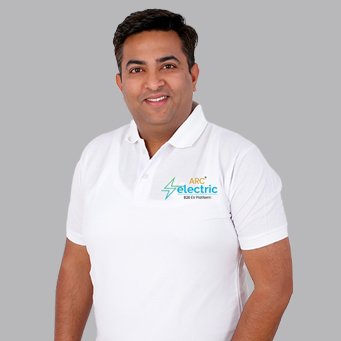
Abhinav Kalia
CEO and Co-Founder, ARC Electric
Akshat Modi
Head - Strategic Growth & Partnerships, Exponent Energy
Mishu Ahluwalia
Co-Founder and CEO, TREVEL
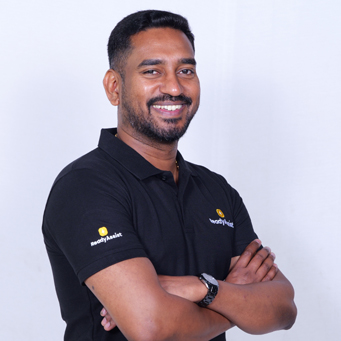
Vimal Singh SV
Founder and CEO, ReadyAssist
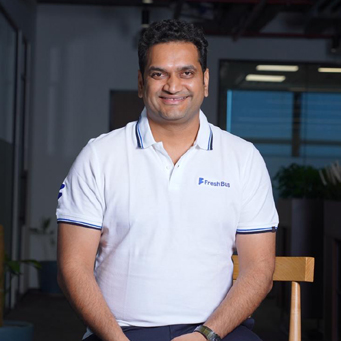
Sudhakar Chirra
Founder & CEO, Fresh Bus
11:00 – 11:50 AM
Panel 2: Financing E-Mobility Businesses: Risk, ROI and Reality Check
Balancing heavy capex in manufacturing/infra with asset-light, platform-led models.
Technology obsolescence, battery degradation and residual-value uncertainty.
Unit economics vs ecosystem economics: when do EV ventures truly turn profitable?
Impact of schemes like FAME and PLI on investor confidence and business design.
Role of VC, PE, sovereign and strategic OEM investments in the next phase.
What lenders and investors now expect in terms of guarantees, data and governance.
Speaker
Aditya Singh
Co-Founder & CEO, TapFin
Bojarajan N
Chief Visionary and Catalyst, Tarini Insurance
12:20 – 12:50 PM
Keynote : What Will Define India’s EV Growth in the Next Five Years?
Breakthrough technologies most likely to scale in India by 2030.
Policy stability vs market maturity: what matters more now.
India’s evolving role in global EV and battery supply chains.
Talent and skill development bottlenecks and opportunities.
The single biggest risk to India’s EV story – and how to hedge it.
Speaker
Dr. Ashok Jhunjhunwala
Institute Professor, IIT Madras & Chairman, Immersive Technology and Entrepreneurship Labs
12:50 – 01:40 PM
Panel 3: Skilling India: Building a Future-ready EV Workforce
Gaps between traditional automotive skills and EV needs (electronics, software, batteries).
Shifting from IC engine expertise to power electronics and vehicle intelligence.
High-demand skills in cell chemistry, thermal management and BMS.
Technician training for fast-charging deployment, grid synchronisation and smart energy systems.
Industry–academia collaboration and MSME readiness: where India stands today.
Certification frameworks and upskilling pathways for technicians, engineers and managers.
Moderator
Sanjeev Kumar Jha
Editor, Entrepreneur India
Speaker
Dr. Anand Lakshmanan
Sr. Project Advisor, Advanced Automotive Technologies; Lead CAAR
Sourav Dasgupta
Interim Director, Tata Indian Institute of Skills
Jayesh Thakkar
Chairman & MD, Mercury EV Tech
Dr. A.S. Ramadhas
Director, GARC
01:40 – 02:40 PM
Networking Lunch
Co-located Event
India EV Awards
27 June 2027
Chennai Trade Centre, Chennai
Our Partners
Supported By
Supported By
Supported By
Supported By
Supported By
Our Exhibitors
View All Participants
Past Exhibitors
Past Partners
Silver Partner
Recycling Partner
Supported By
Supported By
Supported By
Supported By
Supported By
Supported By
Supported By
Knowledge Partner
Knowledge Partner
Knowledge Partner
Media Partner
Media Partner
Media Partner
Media Partner
Media Partner
Organised By
Media Partner
Media Partner
Media Partner
Media Partner
Organised By
Licensing Digital Partner
Dealer/ Distributor Partner
Business Partner
Promotional Partner
Official Franchise Website
Official Franchise Magazine
Register Now